You know that moment when your WiFi suddenly slows down for no obvious reason? You restart the router, move closer, maybe even blame your internet provider… but nothing really fixes it.
Then a thought creeps in: Wait… is someone else using my WiFi?
If you’ve ever had that suspicion, you’re already thinking about Cómo saber quién está conectado a tu WiFi—even if you didn’t phrase it that way. And the truth is, it’s easier to check than most people think.
Let’s walk through it in a simple, no-stress way.
Why This Even Matters
At first glance, it might not seem like a big deal. Maybe a neighbor is borrowing your internet for a bit—what’s the harm?
But here’s the thing: your WiFi isn’t just about speed. It’s about control and security.
When unknown devices connect to your network, a few things can happen:
- Your internet becomes slower and unstable
- Your personal devices could be exposed
- Your network could be used for things you don’t even know about
It’s a bit like leaving your house unlocked. Nothing might happen… but it’s still not a great idea.
Signs Someone Might Be Using Your WiFi
Before you go digging into settings, it helps to know what to look for.
Here are some common signs that something’s off:
- Your connection is unusually slow, even during low usage
- Streaming buffers more than usual
- Your router lights keep blinking when no one’s using the internet
- Devices randomly disconnect
None of these guarantee someone’s sneaking onto your network—but they’re definitely worth checking out.
The Simplest Way to Check
The most direct way to see who’s connected is through your router.
It might sound technical, but it’s actually pretty straightforward:
- Open a browser on your phone or computer
- Enter your router’s IP address (usually something like 192.168.1.1)
- Log in with your router credentials
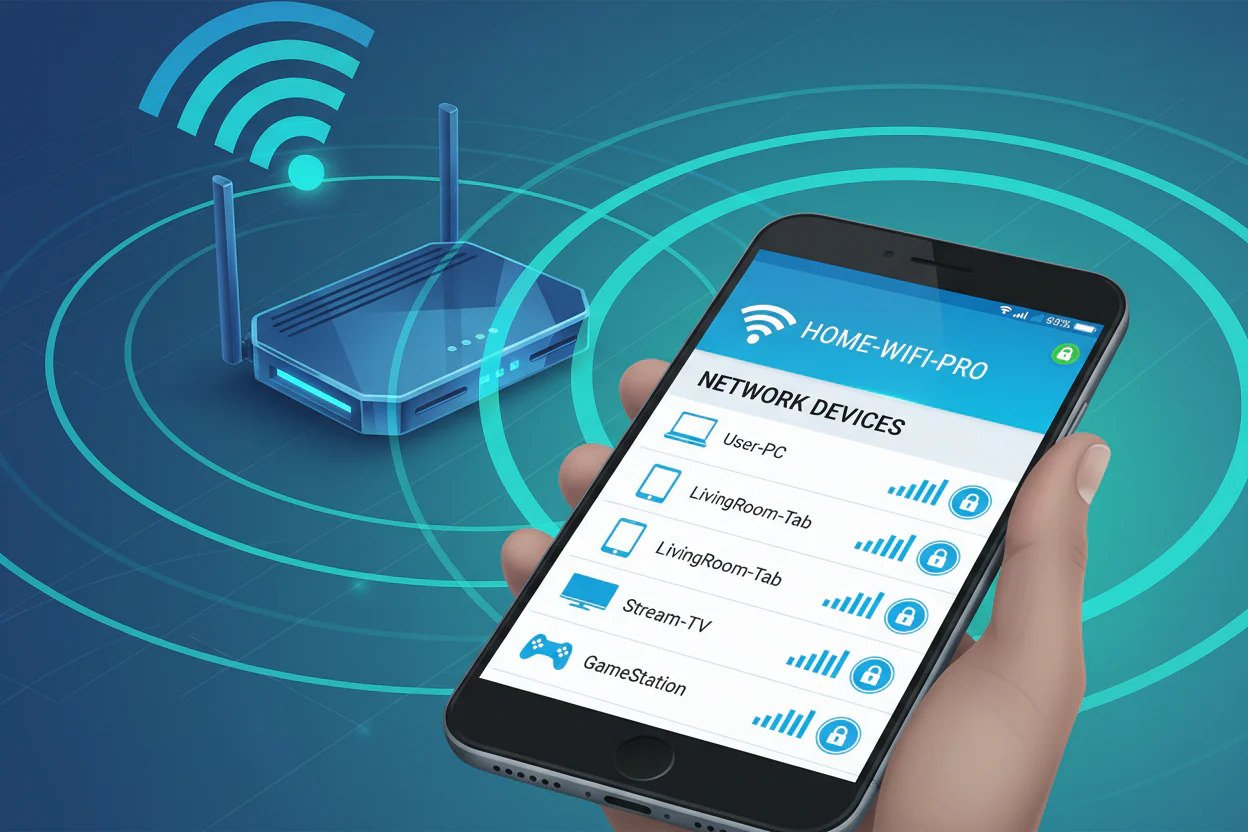
- Look for something like “Connected Devices” or “Device List”
Once you’re in, you’ll see every device currently using your WiFi.
This is basically the real answer to Cómo saber quién está conectado a tu WiFi—just without the mystery.
Figuring Out Which Devices Are Yours
Here’s where most people get confused.
You’ll probably see a mix of familiar and unfamiliar names—some clear, others just random letters and numbers.
A simple trick:
- Turn off WiFi on all your devices
- Reconnect them one by one
- Watch which names appear on the list
Whatever shows up is yours. Anything extra? That’s worth investigating.
An Easier Option: Use an App
If logging into your router feels like too much, there are apps that do the work for you.
These apps scan your network and show all connected devices in seconds. Some even label them clearly (like “phone,” “laptop,” or “smart TV”), which makes things much easier.
They’re especially useful if you want a quick, visual way to monitor your network without digging into settings.
What If You Find a Stranger on Your Network?
First—don’t panic. This is fixable in a few minutes.
Here’s what you should do:
Change Your WiFi Password
This immediately disconnects everyone. Only people with the new password can reconnect.
Use Strong Security Settings
Make sure your network is using WPA2 or WPA3 security.
Turn Off WPS
It’s convenient, but it can make your network easier to access.
Restart Your Router
Once you’ve made changes, a quick restart helps apply everything cleanly.
That’s it. Problem solved.
Keep It From Happening Again
Once your network is secure, a few small habits can go a long way:
- Don’t share your password too freely
- Set up a guest network for visitors
- Check your connected devices occasionally
- Update your router when needed
You don’t have to be paranoid—just a little aware.
One Last Thing (Before You Panic)
Sometimes, that “mystery device” isn’t a stranger at all.
It could be:
- Your smart TV
- A gaming console
- A smart speaker
- Even something like a smart bulb
So before assuming the worst, double-check everything in your home.
Final Thoughts
Learning Cómo saber quién está conectado a tu WiFi isn’t just about catching freeloaders—it’s about understanding your own network.
You don’t need technical skills. You don’t need fancy tools. Just a few simple steps and a bit of awareness.
Because at the end of the day, your WiFi is yours—and you should always know who’s using it.